

 By
By 
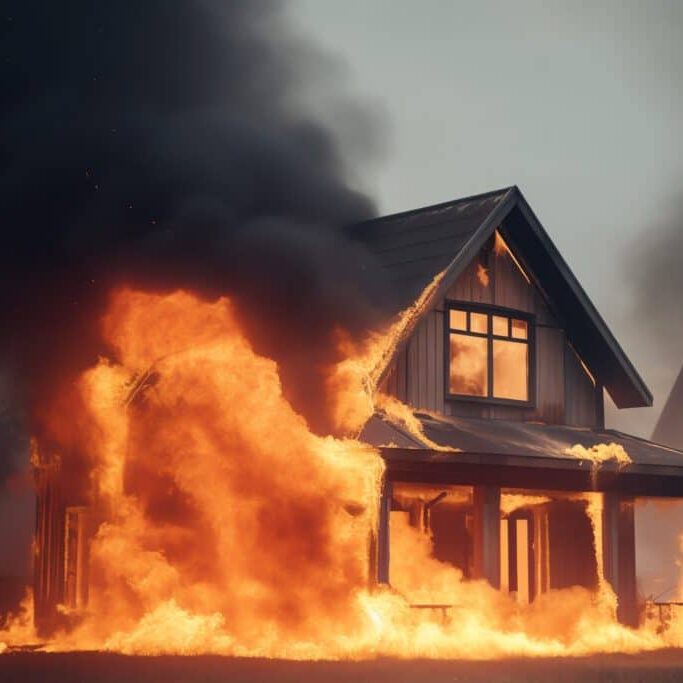
Two hundred forty dollars. That is what one family in Washington County spent on hotel rooms, spoiled groceries, and a flooded basement sump over three days without power.
You already know the feeling. The wind starts at 9 p.m., the lights flicker twice, and you spend the rest of the night refreshing the outage map instead of sleeping. So here is the honest version of how to solve it: figure out what you actually need to run, match the machine to that load instead of to a sales pitch, and get the wiring done by someone who will still answer the phone in February. Below, you will find the sizing math, the fuel choices, the transfer switch decision most people get wrong, and a spring checklist that takes one afternoon.
Start With Your Own Outage History, Not a Brochure
Before you look at a single spec sheet, pull your utility’s outage log from the past two winters. Write down the longest stretch you went without power, then mark which of those hours fell below freezing. That number drives everything else, and almost nobody does it.
If your longest outage was six hours, you are shopping for convenience. If it was five days, you are shopping for survival, and the equipment list changes completely. I have watched homeowners buy a 22kW whole-home unit for a house that loses power twice a year for 90 minutes, and I have watched others try to limp through a four-day ice storm on a portable they had to refuel in a snowbank at 2 a.m. Neither one felt like a win.
Grid reliability is not a local quirk, either. The U.S. Department of Energy tracks outage frequency and duration nationally, and the trend line has been moving in one direction for years. You can look at the broad picture through the Department of Energy if you want the context behind why your street seems to lose power more often than it did a decade ago. Knowing you are not imagining it makes the decision easier to justify.
Whole-Home, Essential-Circuits, or Battery: An Honest Comparison
Most buyers get stuck here because three product categories get marketed as if they were interchangeable. They are not.
Whole-home standby runs everything you would run on a normal day, including the well pump, the furnace, and the electric range. It needs a permanent pad, a fuel connection, and a proper transfer switch. It is the most expensive option and the least interesting to think about after the day it is installed, which is exactly the point.
Essential-circuits standby covers a curated panel: heat, refrigeration, sump pump, internet, a few lights, maybe the microwave. It costs meaningfully less and handles the vast majority of real outages. If you have ever spent an outage running an extension cord up the stairs to keep the router alive, this is the upgrade that ends that ritual.
Home battery storage is quiet, needs no fuel, and switches over fast enough that your clocks stay set. It pairs well with a smaller generator if you want the best of both. It also has a hard ceiling on how long it can carry a heating load in January, which is worth saying out loud before you sign anything.
Reading the Weather You Are Actually Buying Against
New England outages are not random. They cluster around ice, wet snow, and the wind events that follow both. The National Weather Service maintains historical storm data by region through the National Weather Service, and a couple of hours mapping your town’s worst events against your own outage log will tell you more than any dealer’s pitch. If your neighborhood loses power during ice storms specifically, prioritize a unit that can run unattended for days, not one that shines during a two-hour blip.
Here is my take, and you can disagree: for a Vermont house on a well with a propane tank already in the yard, an essential-circuits standby tied to that existing fuel is the best value on the market. It solves the actual problem, it does not require you to stand in the driveway with a gas can, and it does not force you into a battery system sized for a load you will never run.
Ground Truth From a Real Install
A reader in Addison County, call her Dana, started with one requirement: keep the pipes from freezing during a multi-day outage. She ran the numbers and realized her two biggest loads were the well pump and the oil furnace blower, together under 3kW at startup. A whole-home quote had her at more than twice the budget she needed. She went with a smaller standby unit, a subpanel covering nine circuits, and a load-management module so the well and the furnace never kicked on at the same instant.
The install took one afternoon. The hard part was the two weeks before it, spent listing every circuit in her house and deciding honestly which ones she could live without. That list is the work nobody wants to do and the one thing that keeps the invoice sane.
This is also where a local, service-first outfit earns its keep. Companies like Brook Field Service build their business on post-install service calls and transfer switch inspections, not on a one-time sale. That distinction matters about three years in, when your unit throws a fault code in the middle of a storm and you need someone who stocks the part.
Your Three-Week Decision Checklist
- Week one: Pull your outage history and write down the longest duration and what you lost.
- Week two: Walk your panel with a flashlight and list every circuit. Mark each one as critical, nice-to-have, or irrelevant. Count how many land in the first bucket.
- Week three: Get two written quotes that specify the transfer switch model, the fuel source, and the warranty terms on both parts and labor.
Do not skip that third item. A great generator behind a cheap transfer switch is a great generator that will not start when you need it. I would pick a mid-tier unit with a top-tier switch over the reverse every single time.
The Part Most People Learn the Hard Way
A generator is not a purchase, it is a relationship with a machine that sits unused for 11 months and then has to perform perfectly. Maintenance agreements, annual load testing, battery replacements in the controller, oil changes on a schedule nobody remembers. The homeowners who stay happy are the ones who booked the service plan on day one and never thought about it again.
So here is the question worth sitting with this week, before the first hard freeze: if the power went out tonight and stayed out until Thursday, what would Thursday morning look like at your house? Answer that honestly, and you will know exactly what to buy, and what to stop worrying about.








Comments